MissionOps™ Tactical Network Management Suite
A secure, enterprise-grade mission planning platform for creating, simulating, and monitoring radio and network operations.
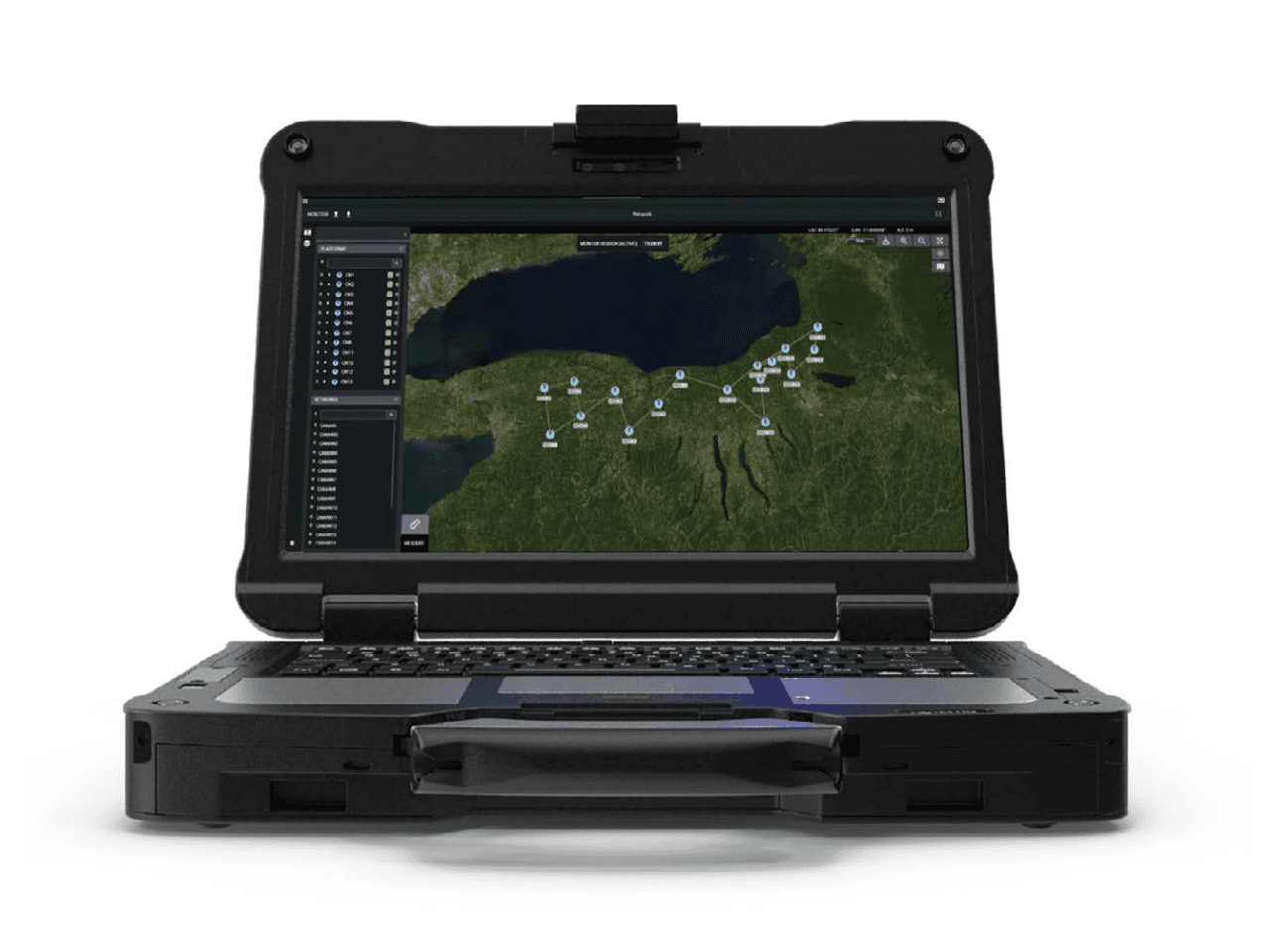
Disclaimer
Due to the sensitive nature of this project, detailed designs and feature work cannot be shared publicly, aside from any mockups used on the L3Harris MissionOps™ website and in attached public artifacts.
I have instead include my process, and work contributions in other ways. Please reach out if you have any questions or would like to discuss my work further.
Define
Problem Statment
Users managing complex radio and network operations faced fragmented tools, making it difficult to plan missions, validate scenarios, and maintain real-time operational awareness.
My Roles
Product Design / UX Design: Lead end-to-end design of features, including user flows, wireframes, mockups, and interactive prototypes for mission planning and simulation
UX Strategy: Define information architecture and interaction models for complex, data-dense systems
Collaboration: Partnering closely with product managers, engineers, and domain experts to translate operational needs into usable software
User Validation: Incorporate user and stakeholder feedback through usability reviews and iterative design refinement
Tools Used
Axure RP
Confluence
Jira
Internal Design System
VS Code
Claude Code
Project Context
Professional Project (full-time role) at L3Harris Technologies
Enterprise, mission-critical SaaS platform supporting secure communications and network operations
Developed within a highly regulated, security-conscious environment
Cross-functional team including product, engineering, and subject-matter experts
Primary Users & Stakeholders
Primary Users:
Mission planners and operators responsible for configuring and executing communication networks
Technical users managing radios, networks, and location-based operations
Secondary Stakeholders:
Program managers and leadership overseeing product readiness
Engineering teams responsible for system performance and reliability
Field Service Reps frequently engaging with users and the product
Internal subject matter experts
Research
Overview
Due to confidentiality constraints, detailed research artifacts cannot be shared publicly. Research activities focused on understanding complex user workflows, operational constraints, and real-time decision-making needs.
Existing Tools & Systems Analysis
Identifying usability gaps and inefficiencies in the current product
Stakeholder Interviews
Understanding mission planning and operational workflows
Design Guidelines
Synthesizing findings from similar applications/tools into models and design principles
Feedback & Iteration
Validating concepts through iterative reviews and internal feedback loops
Design
Design Approach

Designing feature-level experiences within a larger enterprise SaaS platform, balancing complex workflows, information architecture, and role-based access while collaborating closely with cross-functional partners and users.
Key Design Considerations
Feature-Based Workflows: Designing end-to-end workflows for individual features while ensuring they fit cohesively into the broader product ecosystem
Information Architecture: Structuring large volumes of data so users can access the right level of information based on role, task, and context
Progressive Disclosure: Supporting both high-level overviews and deep configuration without fragmenting the experience
Collaboration: Partnering closely with product, engineering, and domain experts to align usability with technical and operational constraints
Cross-Workflow Consistency: Maintaining a coherent mental model across planning, simulation, and monitoring modes
What I Design
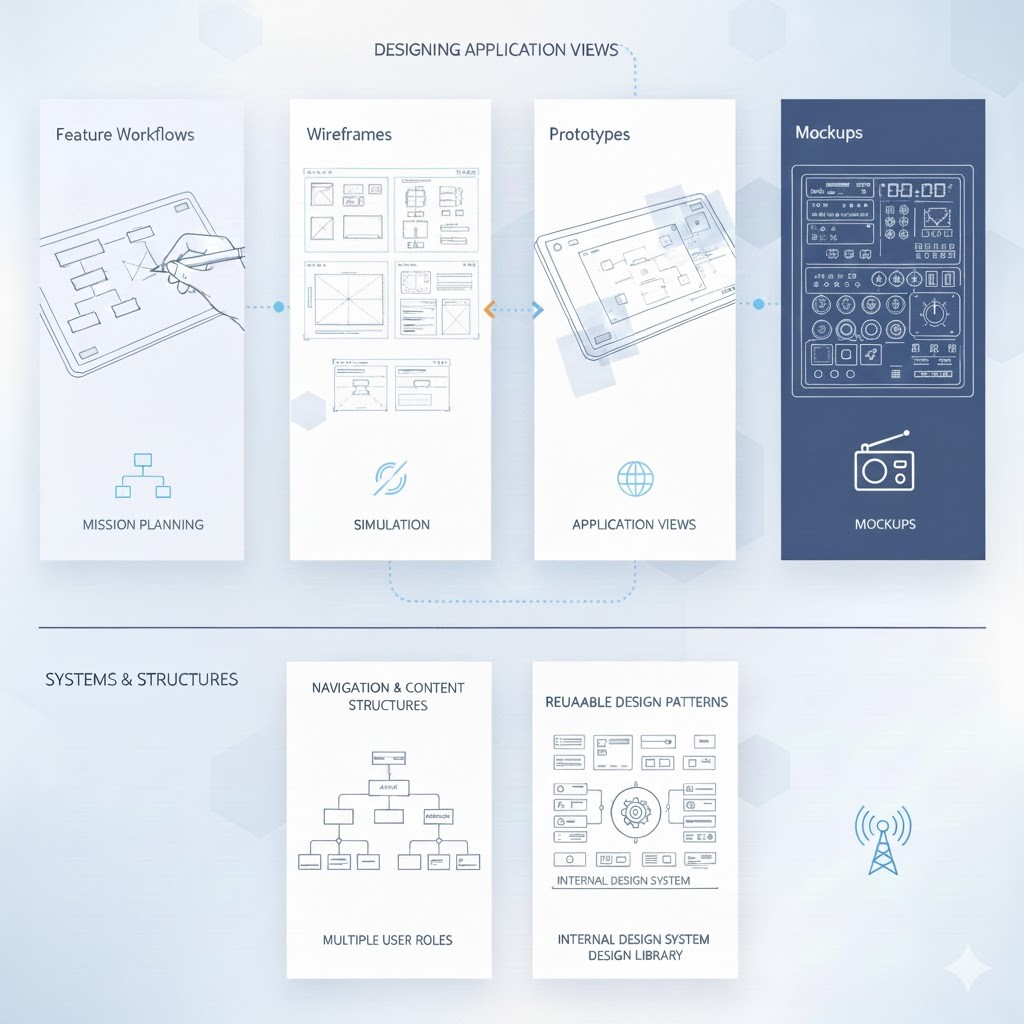
*Image generated by AI
Feature workflows, wireframes, prototypes, and mockups for mission planning, simulation, and other application views
Navigation and content structures that support multiple user roles
Reusable design patterns aligned with internal design systems
Examples
*Examples are limited to mockups and artifacts used on the L3Harris MissionOps™ website.
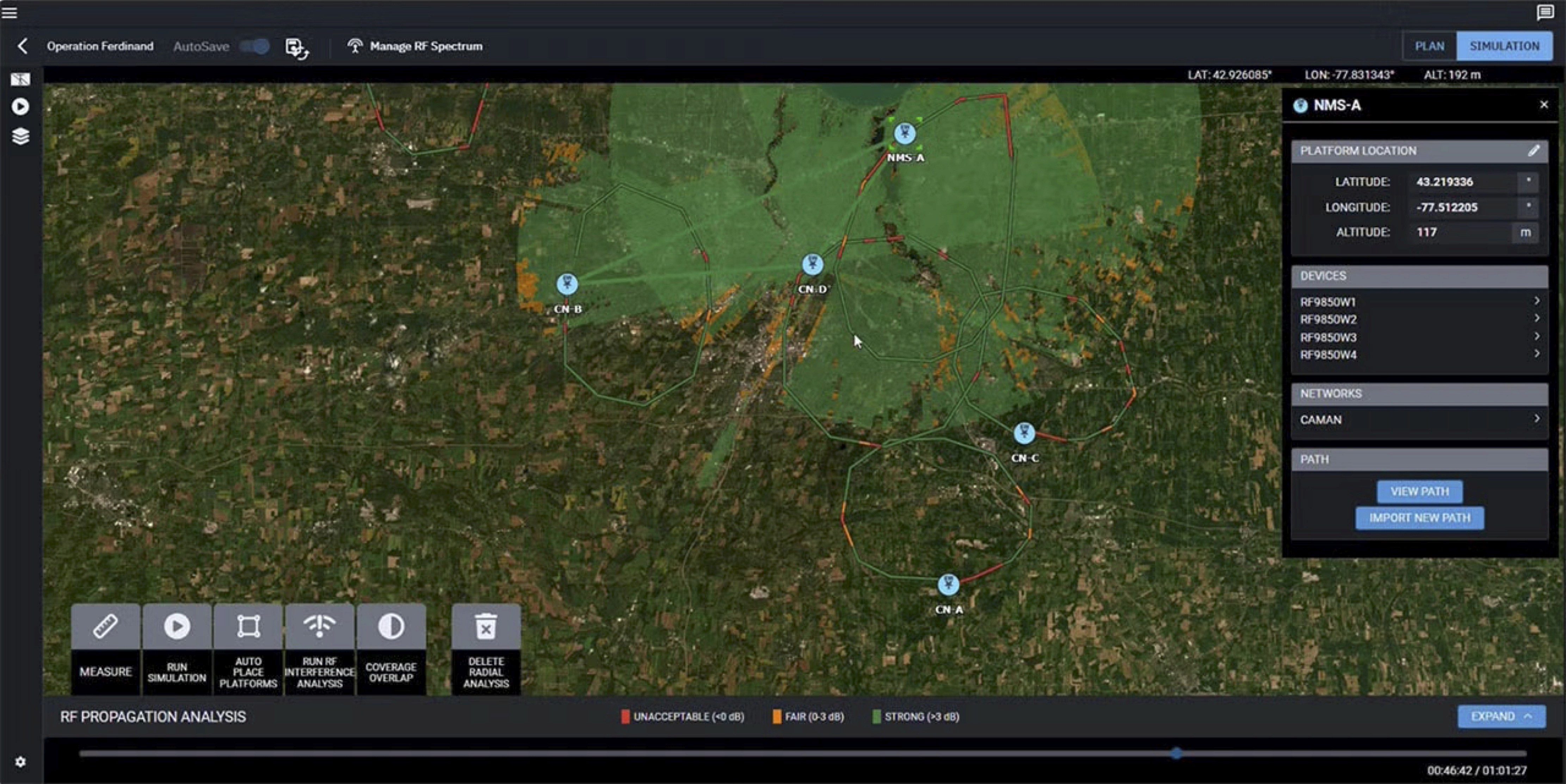
Simulation View: RF Link simulation, device paths, and radial analyses
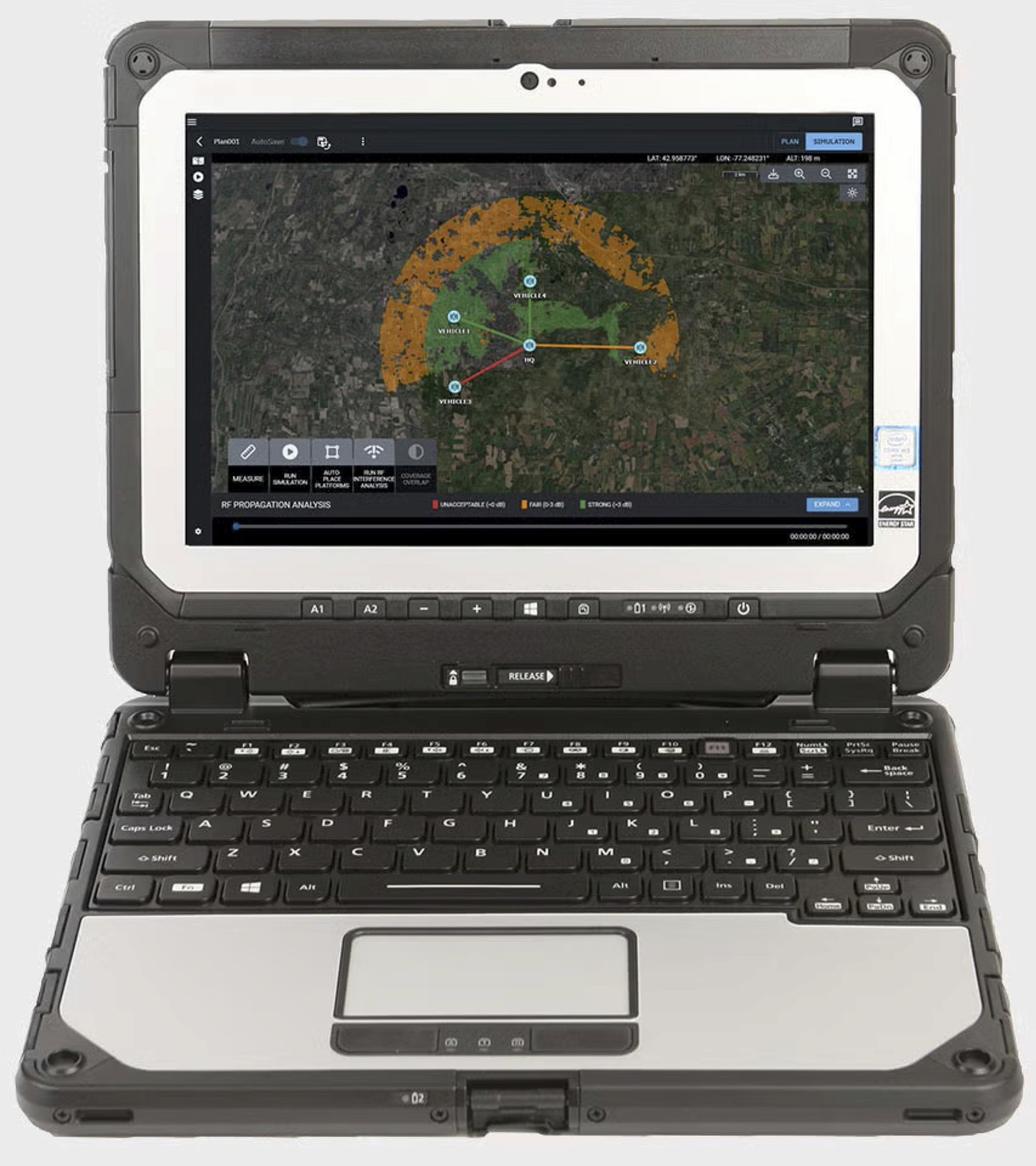
Simulation View: Analyzing a hub and spoke radio formation using a radial analysis
Collaboration & Process
Lead user research sessions and syntheisze insights to understand users' pain points and goals to better advocate for them
Work in close partnership with product owners to define feature scope and requirements
Collaborate with engineers early to ensure designs are technically feasible and scalable
Incorporate feedback from subject-matter experts and stakeholders throughout the design process
Participate in regular design critiques and cross-functional reviews of design artifacts to improve usability
Evaluate
Evaluation Strategy
Evaluation focused on validating feature workflows, information clarity, and usability for advanced and new users through iterative testing and cross-functional feedback.
Methods Used
Moderated usability testing on feature workflows
Role-based scenario testing to validate information access
Stakeholder and subject-matter expert walkthroughs
Iterative design reviews with product and engineering partners
Key Takeaways and Iterations
Predictable Navigation Patterns
Users preferred left-to-right workflows and consistently visible primary navigation, reinforcing expectations shaped by other complex software tools.
Refined navigation patterns to support left-to-right progression and persistent primary navigation
Terminology Matters
Users found certain terms unclear or inconsistent with other tools in the industry, which created friction when learning and navigating the platform.
Updated terminology to better align with industry standards and user mental models
Visual Context is Critical
Users responded strongly to visual representations that helped them understand system structure and relationships, especially when working with complex network data.
Increased emphasis on visual hierarchy and spatial representation within data-heavy features
Reflection
Designing Enterprise Software Is About Systems, Not Screens
This project deepened my understanding that effective enterprise design requires thinking in systems — workflows, data models, permissions, and patterns — rather than isolated UI components.
Clarity Is a Design Responsibility
From information architecture to terminology, I learned that reducing ambiguity is just as important as adding functionality, especially when users rely on consistency across tools.
Collaboration Shapes Better Outcomes
Working closely with product managers, engineers, and subject-matter experts reinforced how early and continuous collaboration leads to better alignment and fewer downstream compromises.
Constraints Can Strengthen Design Thinking
Security, technical limitations, and confidentiality forced more deliberate decision-making and creative problem-solving, strengthening my ability to design within real-world constraints.
Iteration Builds Confidence, Not Just Usability
Repeated feedback cycles — from internal reviews to user testing — didn’t just improve the product, they increased my confidence in navigating ambiguity and advocating for design decisions.
This project sharpened my ability to design complex, high-stakes software with empathy, structure, and collaboration — skills I continue to carry into my work as a product designer.